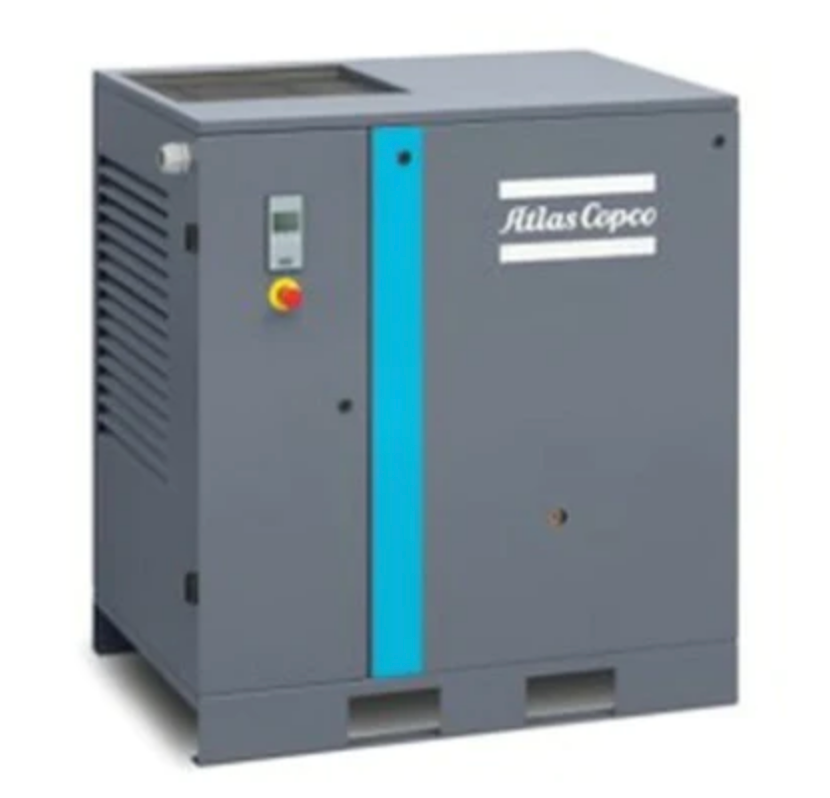
Correct rotary screw compressor sizing begins with measured airflow demand, required pressure, operating pattern, and realistic plans for growth. Selecting only by motor horsepower can result in low pressure during production, excessive unloaded running, or unnecessary capital and energy cost.
The following process provides a practical starting point for defining the compressor capacity your facility actually needs.
Measure the current airflow demand
List all machines, pneumatic tools, cylinders, valves, and processes that consume compressed air. Record the rated flow for each item, then identify which users can operate at the same time. The total connected load is not always the same as the simultaneous demand.
Where an existing system is available, a flow survey or data logging provides stronger information than adding equipment nameplate values. Measurements should cover normal production, changeovers, cleaning periods, and peak shifts.
Separate average demand from peak demand
A compressor selected for a short peak may be oversized during most operating hours. A properly sized air receiver can support brief high-flow events, while the compressor covers the average load. Longer peaks may require additional compressor capacity or a sequenced multi-compressor arrangement.
- Record the duration and frequency of each demand peak.
- Identify whether peaks occur simultaneously.
- Check how quickly system pressure is allowed to recover.
- Review receiver volume and distribution-pipe restrictions.
Determine the minimum required pressure
Start with the minimum pressure required at the most critical point of use. Add verified losses through piping, dryers, filters, valves, and elevation changes. Avoid choosing an unnecessarily high compressor pressure simply to compensate for leaks or blocked treatment equipment.
Higher discharge pressure increases compressor power consumption. Reducing pressure drop and correcting local pressure problems is often more efficient than raising the entire system pressure.
Match the compressor to the duty cycle
A rotary screw compressor is commonly selected for long operating hours and continuous industrial demand. However, the control method still matters. A fixed-speed unit works best near a stable design load. When demand varies widely, a variable-speed compressor or properly sequenced compressor bank may reduce unloaded energy.
Apply a realistic allowance for leakage and growth
Include a reasonable allowance for known leakage and planned production additions. Do not apply several overlapping safety factors. Excess capacity can create inefficient cycling and poor operating conditions. If substantial future growth is uncertain, a modular system may provide better flexibility than one very large compressor.
Information needed for final selection
Document required CFM or m³/min, minimum point-of-use pressure, operating hours, load variation, receiver size, voltage, ambient temperature, altitude, and required air quality. Treatment equipment should be sized at the same corrected flow and operating conditions.
Browse available rotary screw air compressors, or send your measured demand and operating requirements for an application-focused shortlist.