Water vapor enters every compressor with the intake air. As compressed air cools, part of that vapor condenses into liquid water. Without suitable drying and drainage, moisture can corrode piping, damage pneumatic equipment, contaminate products, and cause instruments to malfunction.
A compressed air dryer should be selected by the required pressure dew point and actual operating conditions—not by pipe size alone.
What is pressure dew point?
Pressure dew point is the temperature at which water begins to condense at system pressure. A lower pressure dew point means drier air. The correct target depends on the process and the lowest temperature that downstream piping will experience.
If air piping passes through an area colder than the delivered dew point, condensation can still form after the dryer. This is why outdoor piping and cold-storage applications require special attention.
Refrigerated air dryers
Refrigerated dryers cool compressed air so moisture condenses and can be separated. They are widely used for general manufacturing, workshops, packaging, and pneumatic equipment where a moderate dew point is acceptable.
Advantages include relatively low energy use, simple operation, and low purge-air loss. They are usually the practical choice when the distribution system remains above freezing and the process does not require extremely dry air.
Desiccant air dryers
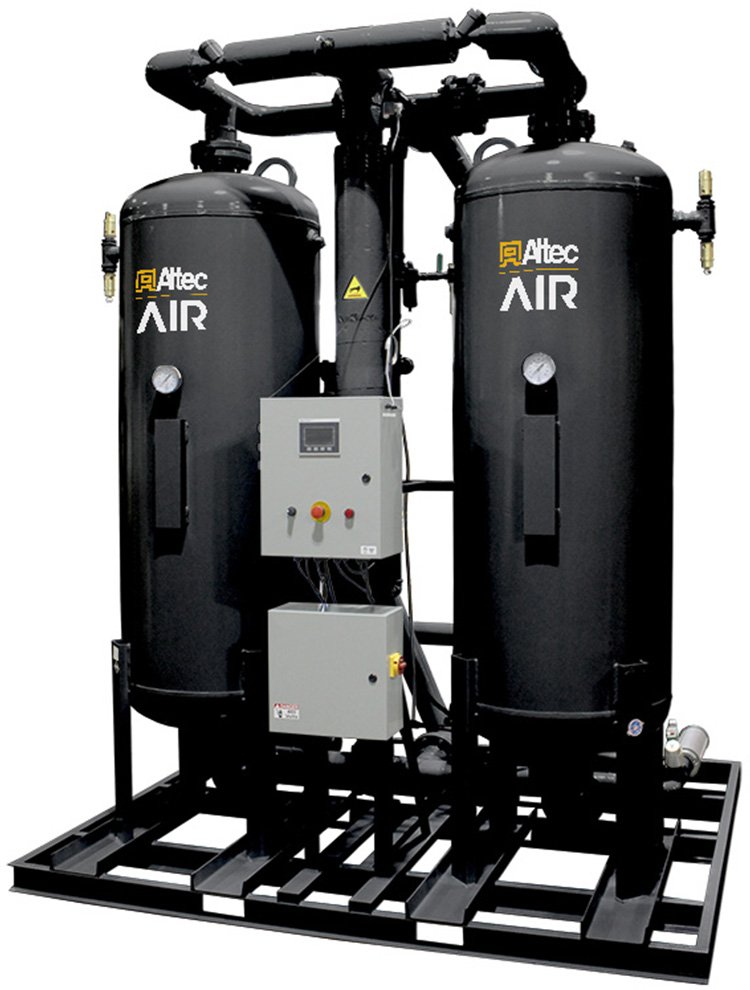
Desiccant dryers use an adsorbent material to remove water vapor and can achieve much lower dew points. They are often selected for instrumentation, critical processes, outdoor piping in cold environments, and applications where moisture would directly affect product quality.
Heatless dryers use a portion of dried compressed air for regeneration. Heated and blower-purge designs reduce or change the purge requirement but introduce heaters, blowers, and a different operating profile. The best design depends on airflow, utility cost, and required dew point.
Critical sizing inputs
- Maximum inlet airflow, including realistic peak demand.
- Minimum and maximum operating pressure.
- Maximum compressed-air inlet temperature.
- Ambient temperature and cooling conditions.
- Required pressure dew point.
- Allowable pressure drop and purge-air consumption.
Published dryer capacity is based on stated reference conditions. High inlet temperature, low pressure, or high ambient temperature can reduce usable capacity, so correction factors must be applied.
Filtration and condensate management
Dryers do not replace filtration. A refrigerated dryer needs effective water separation and drainage. A desiccant dryer normally needs upstream coalescing filtration to protect the desiccant and downstream particulate filtration to capture desiccant dust. Browse our compressed air filtration options alongside available air compressor dryers.
Avoid unnecessary pressure loss
Every filter, dryer, valve, and undersized pipe adds pressure drop. Review the complete treatment train and maintain drains and filter elements. Raising compressor pressure to compensate for neglected treatment equipment increases energy cost.
Share your airflow, pressure, inlet temperature, and dew-point requirement for help selecting an appropriate dryer configuration.