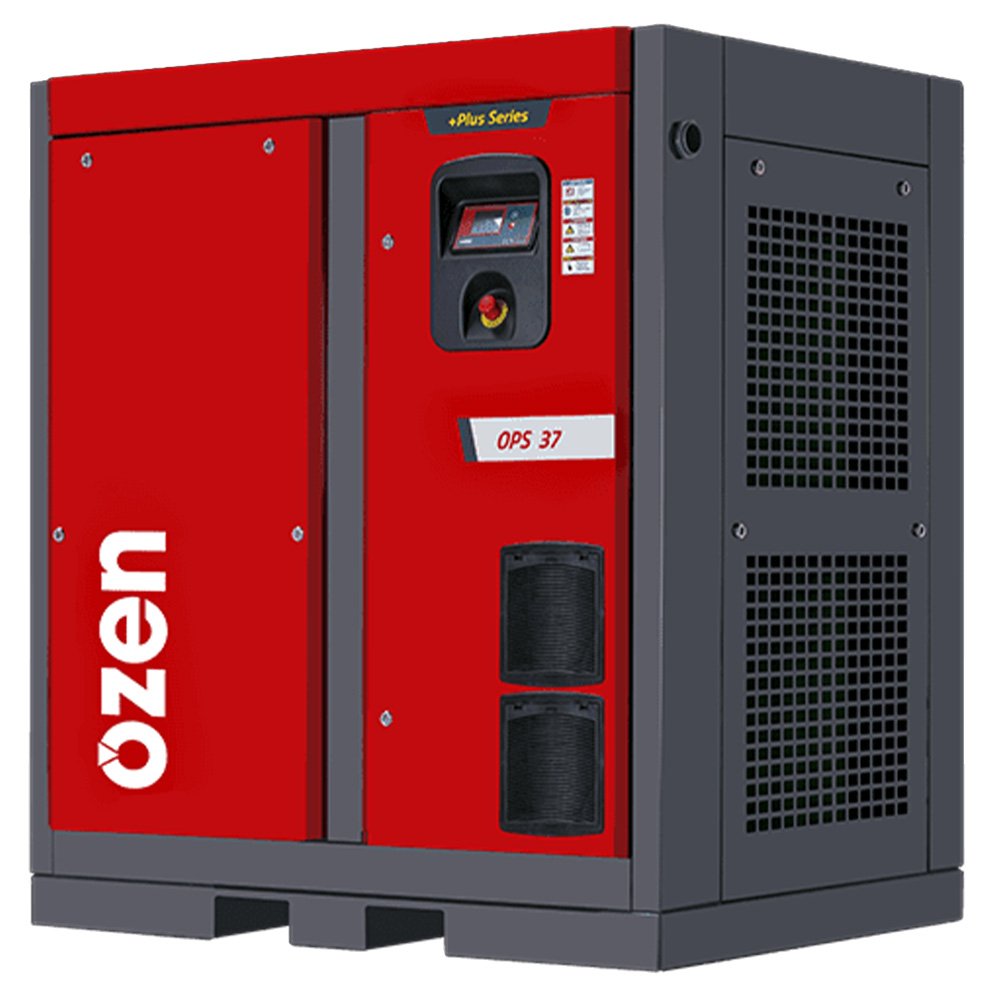
Fixed-speed and variable-speed rotary screw compressors can both deliver reliable industrial air. The correct choice depends on the facility’s demand profile—not simply on which control technology is newer.
A fixed-speed compressor operates its motor at a constant speed and manages demand by loading and unloading. A variable-speed drive compressor changes motor speed to match airflow demand within its control range. Understanding how many hours the system spends at each load point is essential before comparing the two.
When fixed speed is a strong choice
A correctly sized fixed-speed compressor can be highly effective when demand is stable and remains close to the compressor’s full-load capacity. It may also offer a lower initial cost and a simpler electrical/control arrangement.
Fixed-speed selection is particularly suitable for a steady base load or as the lead compressor in a sequenced system. The main risk appears when the unit spends long periods unloaded, because the compressor continues to consume power without delivering its rated airflow.
When variable speed adds value
A variable-speed compressor is designed for applications where demand changes throughout the shift. By reducing motor speed during lower demand, the compressor can limit unloaded operation and maintain tighter system pressure.
The potential saving depends on the actual load profile, turndown range, minimum speed, system storage, and control settings. A variable-speed unit that regularly operates outside its efficient range can still be a poor selection.
Compare the complete operating profile
- Stable demand near full load: fixed speed may provide a strong lifecycle result.
- Demand that varies for long periods: variable speed may reduce part-load energy.
- Short, sharp peaks: review receiver capacity before increasing compressor size.
- Multiple compressors: sequencing can combine an efficient base-load machine with a trim compressor.
Pressure and energy considerations
Variable-speed control can maintain a narrower pressure band, which may allow a lower average system pressure. However, leaks, inappropriate end uses, and pressure drop should still be corrected. A drive cannot compensate for an inefficient distribution system.
Installation and maintenance
Confirm ventilation, ambient temperature, electrical conditions, harmonic requirements, service capability, and availability of drive components. Both compressor types require normal maintenance of lubricant, filters, separators, coolers, drains, and treatment equipment.
Evaluate lifecycle cost, not purchase price alone
Compare annual energy at measured load points, expected operating hours, initial cost, service requirements, and production risk. An air audit with logged flow and power data provides the best basis for an investment decision.
Explore fixed-speed and variable-speed rotary screw compressors, or share your hourly demand profile for help comparing suitable configurations.